
Lane and market context
Normalized source observations can sit beside a lane without being blended into an unexplained answer.
Connector availability can depend on tenant configuration, provider contracts, geography, transport mode, permissions, and source health. A source is described as live only when the product can prove it.
Normalized source observations can sit beside a lane without being blended into an unexplained answer.
Public and permissioned records can support verification workflows while retaining source and freshness.
Route-aware observations belong to a place and time, with degraded states when coverage is unavailable.
Relevant public events and rules can inform the workflow without becoming legal or operational guarantees.
Licensed mapping, mode-specific routes, geofences, and observation age can support map-led operations.
Permissioned GPS, ELD, and device states can be attached to the right load, vehicle, and company.
Yard, facility, dock, and terminal records can populate purpose-built operational views.
Authorized AIS, port calls, and marine routes can appear when licensed, current evidence exists.
Organization, role, and tenant context travels into the surface instead of being inferred in the browser.
Load documents, compliance records, and lifecycle evidence remain attached to the operational object.
Tokenized payment inputs and settlement events can connect without exposing raw card data to the platform.
System-to-system interfaces are scoped to the tenant, role, procedure, and evidence available.
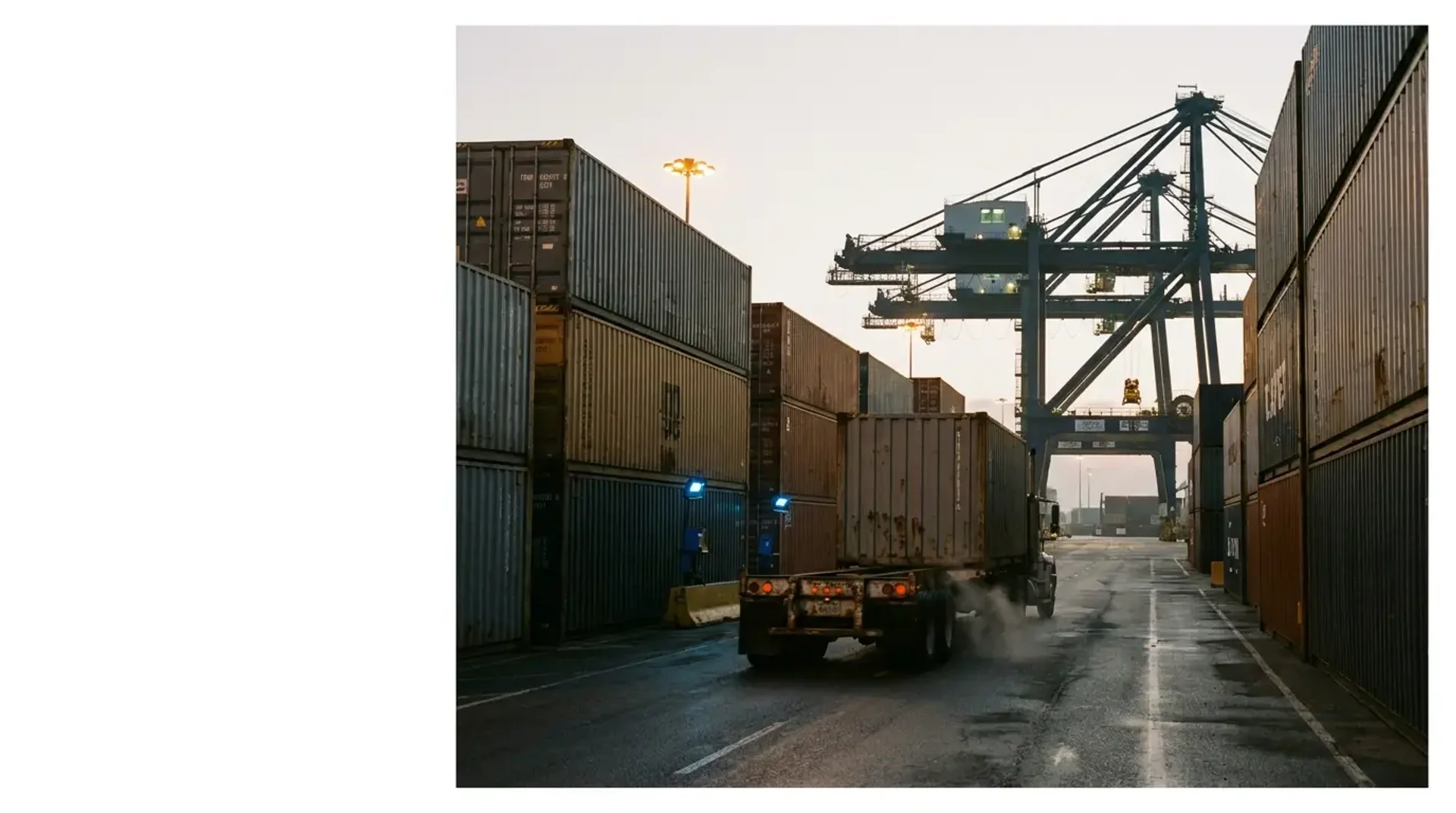
Integration has a physical outcome
The relevant record has to reach the person, place, and next system that owns the move.
Port terminal · Drayage
Tell us which systems own identity, movement, documents, payments, or source observations in your workflow.